Adding skylights to a flat roof can greatly improve natural lighting and energy efficiency. However, the process requires careful planning and execution.
Choosing the right skylight, preparing the roof, and following a precise installation procedure are essential steps. Neglecting any part of this process can lead to issues down the line.
Understanding these elements is vital for a successful installation and long-lasting performance. What follows is an extensive guide to navigate this endeavor effectively.
When deciding on the appropriate skylight for a flat roof, homeowners must consider several important factors to guarantee functionality and aesthetics. The size and style of the skylight should complement the home's architectural design while maximizing natural light.
Additionally, the type of glazing is essential, as energy-efficient options can help regulate indoor temperatures. Homeowners should also evaluate the frame material for durability against weather conditions. Placement is significant to avoid leaks and make sure proper drainage.
Finally, local building codes and regulations must be adhered to, ensuring that the chosen skylight meets safety standards and enhances the overall value of the property.
Selecting the right skylight is just the first step; proper installation requires specific tools and materials to guarantee a successful project.
Essential tools include a measuring tape, circular saw, utility knife, and level, making sure of accurate cuts and proper alignment. A hammer, nails, and roofing screws are necessary for securing the skylight in place. Additionally, materials such as flashing, sealant, and underlayment help prevent leaks and protect the roof structure.
Safety equipment, including gloves and goggles, is also crucial for personal protection during the installation process. Having all these items on hand guarantees a smooth and efficient skylight installation.
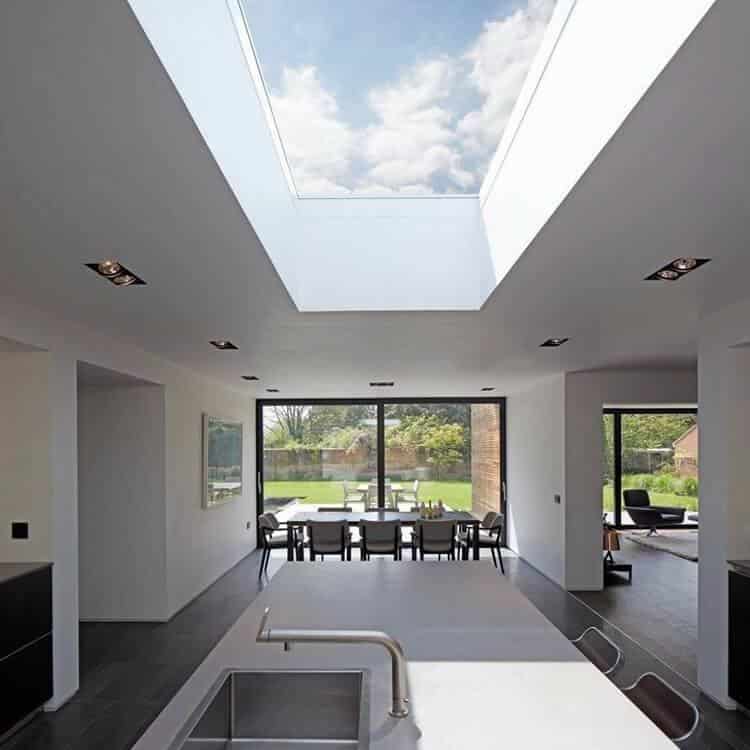
Before beginning the installation of a skylight, it is essential to prepare the roof adequately to guarantee a secure and waterproof fit. This preparation involves inspecting the flat roof for any damage, such as cracks or leaks, which must be repaired prior to installation.
Clearing the area of debris and confirming proper drainage is also vital, as stagnant water can compromise the skylight's integrity. Additionally, measuring the desired skylight location accurately allows for a precise cutout.
Finally, consulting local building codes and obtaining necessary permits assures compliance and a smooth installation process, laying the groundwork for a successful skylight addition.
To guarantee a successful skylight installation, following a step-by-step process is essential. First, the installer should mark the desired skylight location on the roof, ensuring it aligns with the interior ceiling.
Next, they must carefully cut the opening in the roof, taking care to avoid any structural beams. Afterward, the skylight frame is placed in the opening, ensuring it fits snugly. The installer then secures the frame with appropriate fasteners and checks for level.
Finally, they should prepare the surrounding roof area for waterproofing, ensuring a solid foundation for the upcoming sealing and insulation steps.

With the skylight frame securely in place, the next step involves sealing and insulating to prevent leaks and enhance energy efficiency. A high-quality waterproof sealant should be applied around the perimeter of the frame, ensuring a tight bond with the roofing material.
Additionally, insulation strips or foam should be used to fill any gaps between the skylight and the roof, minimizing heat transfer and potential condensation issues. Care must be taken to follow manufacturer guidelines for materials and application methods.
Proper sealing and insulation not only protect against water intrusion but also greatly improve the overall energy performance of the skylight.
Although skylights can provide significant natural light and energy savings, regular maintenance is essential to guarantee their longevity and performance. Homeowners should frequently inspect skylights for signs of leaks, cracks, or condensation.
Cleaning the glass and frame with mild soap and water helps maintain clarity and prevents grime buildup. Additionally, checking the seals and flashing for deterioration can prevent water infiltration. It is advisable to trim nearby trees to avoid debris accumulation on the skylight.
Finally, scheduling professional inspections every few years can identify potential issues early, ensuring that the skylights remain functional and efficient for years to come.
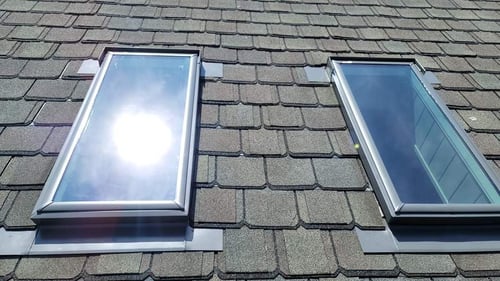
Skylights are not suitable for all climates. In regions with heavy snowfall or extreme heat, skylights can face challenges such as ice buildup or excessive heat gain. Additionally, areas prone to strong winds or storms may experience leaks or damage. Conversely, in temperate climates, skylights can enhance natural light and ventilation effectively. Homeowners must consider local weather patterns and potential maintenance issues when deciding on skylight installation.
Yes, skylights can leak in heavy rain if they are not properly installed or maintained. Factors contributing to leaks include inadequate seals, poor drainage, and age-related wear. Additionally, the quality of the skylight material plays a significant role in its resistance to leaks. Regular inspections and maintenance can help mitigate these risks, ensuring that the skylight remains watertight and functional during heavy rainfall, thereby protecting the integrity of the interior space below.
Flat roof skylights are not universally suitable for all climates. In regions with heavy snowfall or extreme weather conditions, they may face challenges such as snow accumulation or potential leaks. Conversely, in milder climates, they can enhance natural light and ventilation effectively. It is essential for homeowners to evaluate local weather patterns, insulation quality, and installation techniques to determine the appropriateness of flat roof skylights for their specific environment and needs.